
CELEBRATE SUNDAY
WITH ST. MARY'S
SIXTEENTH SUNDAY IN ORDINARY TIME
Have faith and serve others.
SIXTEENTH SUNDAY IN ORDINARY TIME
In Catholicism, the crucifixion plays a central role in our life of worship. Every time we go to Mass, we experience the passion and death of our Lord offered for us under the loving gaze of our Lord’s body on the crucifix. On the one day we commemorate his passion, Good Friday, we process up to the altar to venerate this cross; when we lower ourselves to embrace the corpus, many of the faithful go down to kiss his feet, to express their gratitude for the wounds of Christ most accessible to us, and to keep in our hearts the words of the prophet Isaiah: “How beautiful are the feet of those who bring good news.” As a Church, we often find ourselves at the feet of Christ, listening to his words, adoring his wounds, and radiating in the love of our master’s life and sacrifice.
READ THIS SUNDAY'S MESSAGE
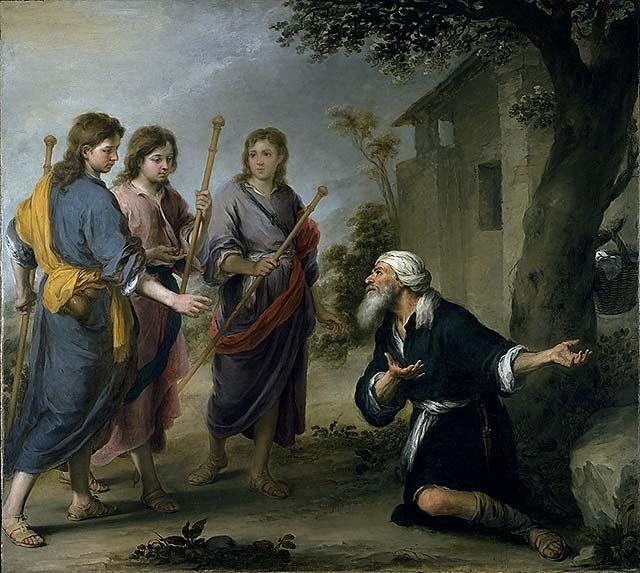
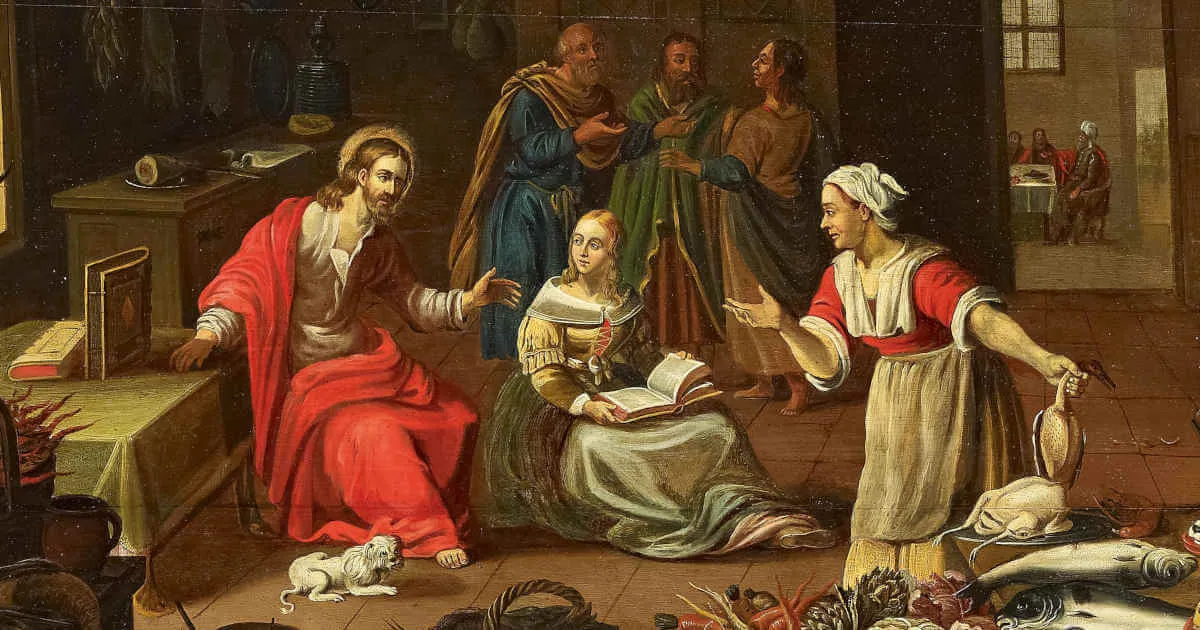
Christ’s feet are often mentioned throughout the Gospels. At that moment in history, travel was mostly done on foot, and because of this, every home would have a basin of water at the front door for guests to wash their feet after a long journey. The ultimate sign of hospitality and respect would be to wash the feet of others. Hospitality was the preeminent virtue in the Middle East; however, Jews placed only one above it–faith. In this Sunday’s first reading, Abraham extends a traditional type of hospitality to the three strangers who come to him at Mamre to share good news, that he and his wife Sarah will have a son of their own. He tells Sarah to help him welcome these strangers so that he might bless them, but that same son whom these strangers have come to promise will one day nearly be sacrificed as a sign of Abraham’s faith in the will of God. Every Jew subsequently elevated faith over hospitality, and their reasoning was the example of their great Patriarch. Thousands of years later, as Jesus enters into the home of Mary, Martha, and Lazarus, Martha finds herself hard at work, making sure that this most special guest might feel welcomed and satisfied with their hospitality. But her sister did not join her. Instead, Mary found herself at the feet of Christ, as a student would be at the feet of their teacher, listening and learning. We can empathize with Martha here, who is merely doing what she is called to do without any help, while her sister instead is receiving the presence of Christ. How often would we rather spend time with our Lord than maintain the spaces or things of the church so that it is welcoming to our visitors? How often would we rather sit and listen to Christ than be hard at work? But Christ must remind Martha of the importance of their uniquely Jewish identity: faith has passed hospitality as the preeminent virtue of their people.
Modern scholars, in an attempt to explain the Gospels more “plausibly”, have since turned from one of the Church’s longest standing traditions, first posited by Pope Saint Gregory the Great: that Mary of Bethany, Martha’s sister, is the same person as Mary Magdalene, our diocese’s patroness who we will celebrate this upcoming week. But so often in the Gospels, especially in the most important scene when she is the first to encounter Christ after the Resurrection, Mary Magdalene also always finds herself at the feet of Christ. For Mary of Bethany to sit at the feet of Christ was scandalous; only students did so to their teachers because those same students would one day be teachers themselves, a position forbidden for women. But Mary Magdalene, prioritizing her faith in Christ, became the Apostle to the Apostles, emulating Christ in that prophecy of Isaiah, bringing the good news of Christ’s Resurrection to those men who would one day bring the good news to all the ends of the earth. Christ’s washing of their feet at the Last Supper was not merely a sign of hospitality, but primarily a priestly anointing for these men specifically. But first, his feet were adored by those who had unwavering faith, like Mary. When you venerate the cross, when you worship Christ, and when you gaze upon the crucifix, appreciate his feet as Mary did. Our preeminent virtue is now love, and how beautiful are the feet who brought the love of Christ, the Gospel message, to us.
© 2026 All Rights Reserved
Site by 